Road Trip Series, Part 4: Which EV Actually Handles a Road Trip Best?

Welcome to Drive-Electric's road trip series. We look at the three most popular road trips in Australia and recommend the journey, the vehicles and how you should prepare for each trip. Today it's the vehicles themselves, which EV actually handles these three routes best, and, importantly, why. |
We've mapped three of Australia's major interstate routes now, so it's time for the obvious follow-up question. Which EV Actually Handles a Road Trip Best? If you're actually choosing a car with road trips in mind, which brand and which model genuinely handles it best? We're grading on the things that matter on a real drive, charging speed, how often you'll need to stop, and which Tesla makes the most sense if you're going Tesla specifically.
Key Facts
|
The Charging Speed Grading
Model | Peak DC Charging | 10-80% Time (350kW charger) | Architecture |
Hyundai Ioniq 5 | Up to 350kW rated, ~235kW real peak | ~18 minutes | 800V |
Kia EV6 | Up to 350kW rated, ~235-240kW real peak | ~18 minutes | 800V |
Mercedes-Benz EQS400 | Up to 350kW | ~10 minutes for 320km added | 800V |
BMW iX3 | Up to 400kW | ~21 minutes | 800V |
Tesla Model Y | Peak up to 250kW (RWD peaks lower in practice, around 170kW) | ~25-35 minutes depending on variant, RWD closer to 30 minutes | 400V |
BYD (mainstream models) | Up to 150kW on the Seal and Sealion 7 | ~25-30 minutes | 400V |
BYD Sealion 7 Ultimate (new, August 2026) | Up to 230kW | ~18-20 minutes | 800V |
GWM Ora / Ora 5 | Up to 120kW | ~30 minutes | 400V |
A genuine standout worth calling out here, because leaving it off this list would make the grading incomplete: the Hyundai Ioniq 5 and its sibling the Kia EV6 are among the fastest charging EVs sold in Australia at any price, full stop. They share the same E-GMP platform as the Ioniq 6 and Genesis GV60, and independent testing consistently backs up the manufacturer's 18 minute claim. For pure road trip charging speed, these two are genuinely hard to beat, and if you haven't cross-shopped them against the more talked-about brands, they deserve a serious look.

Which Tesla Actually Makes the Most Sense
If you're set on Tesla specifically, the Model Y is the road trip pick over the Model 3. It's not about charging speed, both share the same underlying architecture and roughly the same real-world charging performance, it's about practicality. Every Supercharger site across all three routes in this series supports the Model Y without exception, it has the cargo space to actually pack for a multi-day trip, and its higher ground clearance and slightly more relaxed driving position suit long highway stints better than the lower, sportier Model 3.
Matching the Car to the Terrain
This is the part that gets skipped in most road trip advice, and it genuinely matters. The three routes we've covered aren't the same kind of driving.
Melbourne to Adelaide and Melbourne to Sydney are both flat, dual-carriageway, consistent-speed driving. Here, charging speed and network coverage matter more than outright efficiency, because you're rarely fighting the terrain for range. This is where the Hyundai Ioniq 5, Kia EV6, Tesla Model Y and Mercedes EQS all genuinely shine, fast charging plus flat roads means minimal stopping.

Sydney to Brisbane is a different proposition. The hillier, windier Pacific Highway sections, particularly around Coffs Harbour, reward genuine efficiency over outright charging speed
A car that sips energy well on undulating roads, rather than one that just charges quickly when it does need to stop, has a real advantage here.
This is where an efficient, aerodynamically clean car with strong real-world range, rather than the highest peak charging number, tends to need fewer stops overall.
Honourable Mentions: The Brands We've Already Reviewed
The Ioniq 5 and EV6 earned the headline spot on charging speed alone, but they're not the only brands worth a proper look for a road trip. Here's a fair hearing for the other brands we've covered on the site, each judged specifically on road trip merit rather than repeating their full review.
Tesla. Still the easiest brand to road trip in Australia, not because it's the fastest charger on paper, but because the Supercharger network is the most complete and the most reliable across all three routes in this series. The Model Y's real-world 10-80% charging sits closer to 25 to 35 minutes than the headline 250kW peak spec suggests, since that peak only holds briefly at very low charge levels. What Tesla trades in outright speed, it makes up for in network certainty, you're very unlikely to arrive at a Tesla Supercharger and find it broken or occupied with no backup nearby.

BYD. The value proposition remains strong for road tripping on a budget, and BYD's charging story is genuinely improving. Current mainstream models like the Seal and Sealion 7 peak at 150kW, giving a real-world 10-80% closer to 25 to 30 minutes. The newly added Sealion 7 Ultimate, introduced in August 2026, is a genuine step up, its 800V architecture and 91.39kWh Blade Battery push peak DC charging to 230kW, putting it in the same charging speed bracket as the Hyundai and Kia pair. Worth watching as BYD rolls this architecture out further across the range.
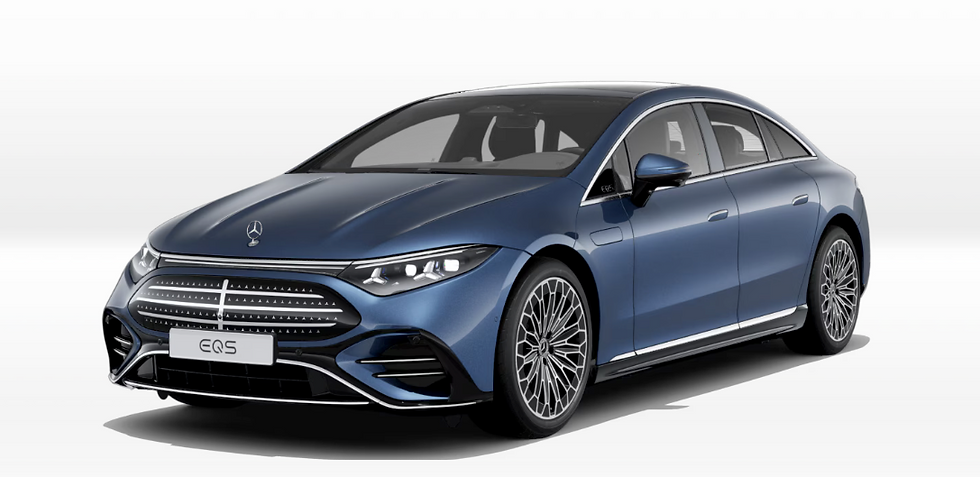
Mercedes-Benz EQS. The obvious pick if range anxiety, rather than charging speed, is your main road trip concern. Its 810km official WLTP range (closer to 788km in real-world Australian spec with 21 inch wheels) means genuinely fewer stops on the flat southern routes, and its 350kW charging is properly competitive when you do need to plug in. The trade-off is price, this is a premium sedan, not a budget road tripper, and Australia currently only gets the rear-wheel-drive EQS400 variant.
BMW iX3. Another strong range play, with an 805km WLTP claim from the new Neue Klasse platform and charging up to 400kW, among the fastest peak rates of any EV sold here. Like the Mercedes, this is a premium buy rather than a budget one, but for buyers who want both genuinely long range and fast charging without compromise, the iX3 belongs in the same conversation as the class leaders.

Zeekr. The 7X remains a genuinely strong road trip contender on paper, with reported DC charging up to 450kW on the RWD variant and 420kW on the Performance AWD, figures that would put it at or near the top of this entire list if they hold up consistently in real-world Australian conditions. Zeekr is a newer brand locally, so its charging infrastructure compatibility and real-world reliability data is still less established here than Tesla's or Hyundai's, worth factoring in if network certainty matters as much to you as peak speed.

GWM. The Ora and Ora 5 are the value pick in this entire comparison, and worth being fair about what that means. At up to 120kW DC charging (not the slower figure some early reporting suggested) and a 10-80% time of around 30 minutes, the Ora 5 isn't fast by 800V standards, but it's genuinely competent, and GWM backs it with a long 7 year vehicle warranty. For a budget-conscious buyer doing the flatter Melbourne routes specifically, it's a legitimate option, just budget an extra stop or two on the longer Sydney to Brisbane leg given its smaller battery and 400V architecture.

The Verdict: Best by Category
Best overall road tripper: the Hyundai Ioniq 5 or Kia EV6. Fast charging, genuinely good real-world range, and a shared platform that's proven itself on exactly this kind of interstate driving.
Best if you're committed to Tesla: the Model Y, for the combination of Supercharger compatibility across every route in this series, cargo practicality, and a driving position suited to long stints.
Best for the flat southern routes specifically: anything on an 800 volt platform with strong DC charging, Mercedes EQS, BMW iX3, Hyundai Ioniq 5, Kia EV6 all fit this brief well.
Worth extra planning on the Sydney to Brisbane leg: models with smaller batteries or older 400V architecture, like entry level GWM Ora variants, genuinely benefit from an extra buffer stop through the Coffs Harbour hills specifically.
Which EV Actually Handles a Road Trip Best: FAQs
Which EV charges fastest for road trips in Australia? The Hyundai Ioniq 5 and Kia EV6 are among the fastest, both achieving roughly 18 minutes for a 10 to 80 per cent charge on a compatible 350kW charger, thanks to their shared 800 volt E-GMP platform.
Which Tesla is best for road trips on the Australian Supercharger network? The Model Y, largely for practicality reasons. Every Supercharger site across the Melbourne-Adelaide, Melbourne-Sydney and Sydney-Brisbane routes supports it, and it offers more cargo space and a more relaxed driving position for long stints than the Model 3.
Does terrain really affect which EV is best for a road trip? Yes. Flat, consistent routes like Melbourne to Adelaide and Melbourne to Sydney favour fast-charging cars, since you're rarely losing range to hills. The hillier Sydney to Brisbane route rewards genuine efficiency and real-world range more than outright charging speed.
Do all 800 volt EVs charge at the same speed? No. An 800 volt architecture enables fast charging, but the actual peak power and how long a car sustains that peak across the 10 to 80 per cent window varies by model, so it's worth checking the specific 10-80% time rather than just the voltage figure.


Comments