Portable EV Chargers Australia 2026: Backup Cable or Genuine Daily Solution?

Quick Facts: Portable EV Chargers Australia
|
Every new EV in Australia arrives with a portable charging cable in the boot, usually a 10 amp "granny cable" that plugs into a standard power point.
Most owners tuck it in the boot, never think about it again, and install a wall charger within the first month. But there's an entire category of upgraded portable chargers that never quite gets talked about honestly: faster than the granny cable, cheaper and more flexible than a fixed wall charger, and genuinely useful in specific situations.
The question is whether those situations describe you. Here's the straight answer.
What "portable" actually means in the EV context
Portable EV chargers, also called portable EVSEs (Electric Vehicle Supply Equipment), are essentially a smarter version of the cable that came with your car.
They plug into a power point at one end and a Type 2 socket on your EV at the other.
What distinguishes them from the basic granny cable is adjustable charge rate, better safety hardware (built-in RCD Type B protection), longer cables (7 to 8 metres is standard), and in some cases an LED display showing charge rate and session data.
What they are not: a DC fast charger. These are all AC units, running from household single-phase power. You're not going to get 150kW from one of these.
What you are going to get is a reliable, flexible, genuinely useful charging solution that doesn't require a licensed electrician, a dedicated circuit, or a wall charger installation.
The three tiers, and the one that matters most

10 amp (2.4kW, ~12km/hr)
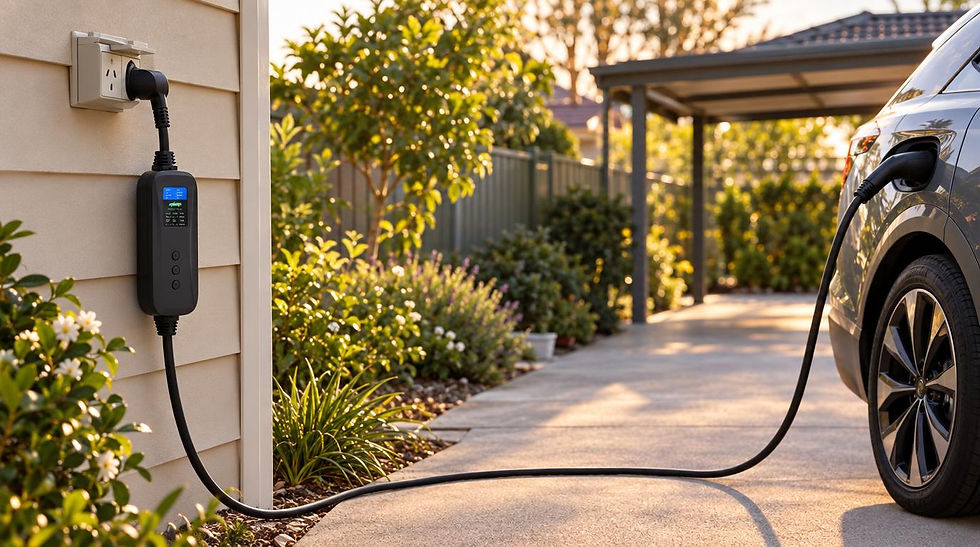
Plugs into any standard household outlet, the same socket your kettle or laptop charger uses.
The granny cable that came with your car is a 10A unit. An aftermarket 10A portable (EVSE Australia's portable is a commonly cited option around the $249 mark) gives you the same basic rate but with better safety hardware, a longer cable, and a more robust build.
Over a 10 hour overnight charge, you'll recover roughly 120km. For the average Australian daily commute of around 38km, this comfortably covers a full day's driving every night.
It's genuinely adequate as a daily charger if you drive modest distances, and it's the obvious solution for renters, travellers, or anyone who wants a backup unit in the boot.
15 amp (3.6kW, ~20km/hr), the sweet spot
The 15 amp tier is where the portable charger becomes a serious daily option rather than just a backup.
A 15A outlet is common in Australian homes, it's the same socket used for air conditioners, caravans, and washing machines, and an aftermarket 15A portable charges around 50% faster than a 10 amp unit.
Over 10 hours, you're adding roughly 200km of range. That covers essentially every commute in the country plus meaningful buffer.
The Alchemy Charge 15A (around $349) is a well-regarded option in this tier at the moment. No installation required if you already have a 15A outlet; if you don't, an electrician can add one for considerably less than a full wall charger installation.
32 amp (7.4kW, ~40km/hr)
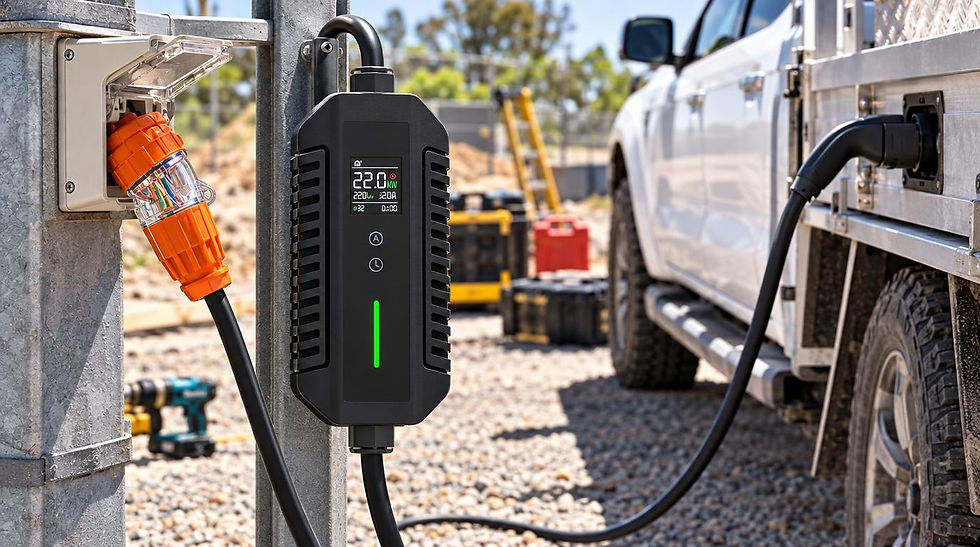
This is effectively the same charge rate as a fixed 7kW wall charger, and at this tier, "portable" becomes a loose description.
A 32A portable needs a dedicated 32A circuit and a CEE blue commando socket, which requires electrician installation.
At that point, the cost difference between a 32A portable (around $499) and a proper fixed wall charger ($600 to $1,200 for the unit, plus installation) narrows to the point where most owners choose the fixed charger instead.
The portable format makes sense here mainly for tradies or fleet operators who move the charger between sites, or for people who genuinely can't wall-mount a fixed unit.
When a portable charger is the right answer
You're renting. Can't install a wall charger without landlord permission, and the landlord's not interested. A 10A or 15A portable works from whatever outlets are accessible and leaves with you when you move.
You travel regularly. A portable in the boot means you can charge from a caravan park outlet, a farm's 15A powerpoint, a holiday house GPO, or any other accessible socket on the road. Not fast, but turning a stay overnight into a fully charged morning is worth the slow rate.
You drive modest daily distances. Under 120km a day, a 10A overnight charge is all you need. Under 200km a day, a 15A covers it. There's a genuine argument that many Australian EV owners don't need a wall charger at all, particularly if they drive less than the national average.
It's a backup. Wall charger failed, installation appointment got pushed, you're at a friend's place overnight with a flat battery. The granny cable that came with your car already fills this role, but a quality aftermarket portable with adjustable amperage and a longer cable fills it better.
When a portable charger is not the right answer
You drive more than 150km a day. A 10A cable won't recover enough overnight. A 15A will, but only just, and you lose the buffer for cold mornings, longer days, or irregular schedules. A fixed wall charger at 7kW is the more comfortable solution.
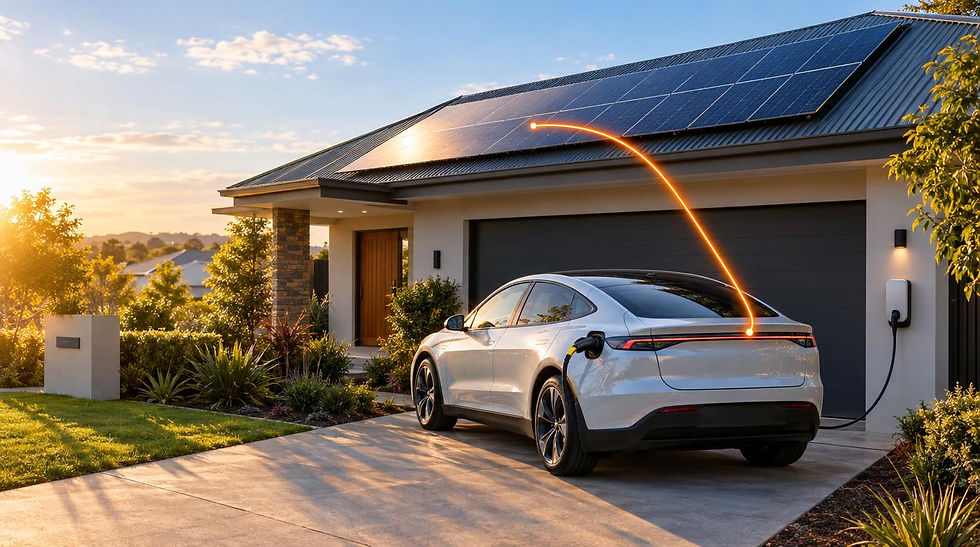
You want solar integration. Portable chargers don't have the smart-charging capabilities to talk to your solar inverter. You need a smart wall charger (Zappi v2, Ocular IQ) for that.
Portable EV Charger Comparison: Key Options in Australia 2026
Model | Tier | Power | Range/hr | Cable | Indicative Price |
EVSE Australia 10A | 10A | 2.4kW | ~12km | 7.5m | ~$249 |
INCHARGEx 10A Gen 2 | 10A | 2.4kW | ~12km | 5.5m | ~$212 |
Alchemy Charge 15A | 15A | 3.6kW | ~20km | 8m | ~$349 |
INCHARGEx 15A | 15A | 3.4kW | ~20km | 5.5m | ~$280 |
Alchemy Charge 32A | 32A | 7.4kW | ~40km | 8m | ~$499 |
Prices are indicative as at September 2026, confirm with the retailer before purchasing.

Do This, Don't Do That
Do this if you're renting, travel regularly, or drive moderate daily distances: buy a 15A portable. It's the tier that actually does the job without the commitment of a fixed unit.
Do this if your daily driving is genuinely modest: stick with the granny cable for backup coverage rather than upgrading.
Don't do this if you drive more than 120km a day and own your home: a fixed 7kW wall charger plus installation is worth the extra cost for the more seamless overnight experience.
Portable EV Chargers : FAQs
Can I use a portable EV charger every day in Australia? Yes, provided the outlet you're using is on a sound circuit and your daily driving is within the overnight recovery range of your chosen tier. A 15A portable recovering roughly 200km overnight suits the vast majority of Australian daily commutes.
What is RCM compliance and why does it matter? RCM (Regulatory Compliance Mark) is the Australian standard marking required for all electrical equipment sold or used here. A portable EV charger without it hasn't been assessed for local electrical safety standards and may not be covered by your home and contents insurance in the event of damage. Only buy from Australian distributors selling RCM-certified units.
Can I use an extension lead with a portable EV charger? Not recommended. Extension leads introduce resistance and can overheat under sustained EV charging loads. Always run the charger cable directly to the outlet, not via an extension cord.
What's the difference between the granny cable and an aftermarket portable charger? Both are 10A units that plug into a standard GPO, but aftermarket portables typically offer adjustable amperage (down to 8A for older circuits), longer cables (7 to 8 metres), built-in RCD Type B protection, LED displays, and more durable build quality. Worth upgrading if the granny cable is your daily charging solution.



Comments